
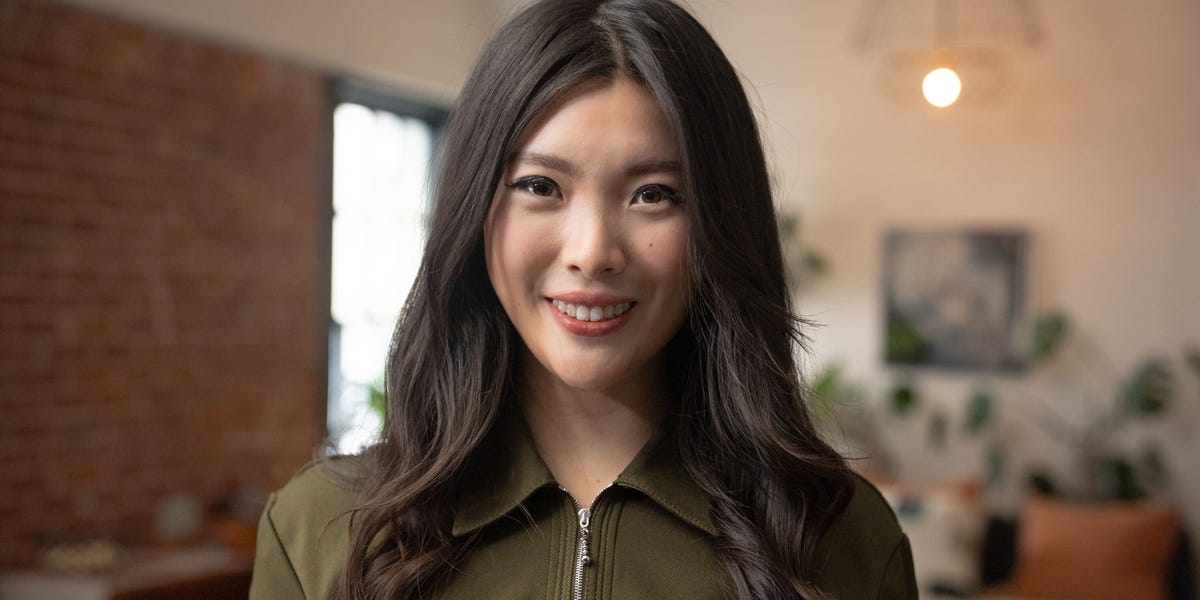
As artificial intelligence shifts from a "chat tool" to a "scientific revolution," 24‑year‑old Stanford PhD dropout Carina Hong has rapidly assembled a "dream team": her startup Axiom Math not only recruited multiple top researchers from Meta's Fundamental AI Research (FAIR) lab, but also persuaded her former advisor—world‑renowned number theorist Ken Ono—to resign his tenured position at the University of Virginia (UVA) and join full time. The AI math startup, founded only nine months ago, has raised $64 million in a seed round and reached a valuation in the hundreds of millions. Hong's appeal comes from a bold vision: building an "AI mathematician"—a system that can independently solve complex mathematical problems, generate rigorous proofs, and self‑verify. In an interview with the Wall Street Journal, Ono said bluntly: "Carina's insight showed me the future integration of mathematics and AI; I could not stand aside." In Silicon Valley's escalating talent war in 2025, this story is not just a startup myth but reflects the AI sector's pursuit of "mathematical force"—from DeepSeek V3.2's math benchmark breakthroughs to Google Gemini 3's reasoning upgrades, mathematics has become AI's "crown jewel."
Carina Hong's story began on the Stanford campus. In fall 2024, as a Rhodes Scholar and a Stanford computer science PhD student, she spent weekends at Verve Coffee Roasters near campus poring over math papers. At the time, AI models like GPT‑5 excelled in language tasks but frequently faltered on mathematical proofs and abstract reasoning—achieving only about 70% accuracy in some AIME problems. Hong identified this gap: AI needs "mathematical thinking" to tackle hard problems such as drug discovery and climate modeling. She quickly formed a small team and in March 2025 dropped out to found Axiom Math, headquartered in Palo Alto. The company's mission is to develop an "AI mathematician" that not only solves problems but can produce "verifiable proofs" and implement "introspection mechanisms," aiming to reshape the paradigm of mathematical research. The seed round was led by Index Ventures with Kleiner Perkins joining; investors included former OpenAI executives who were persuaded by Hong's "math + AI" narrative and believed it could fill current models' "reasoning gap."
Attracting top Meta researchers was the first wave of Hong's "talent magnet." Axiom Math has just 17 employees but an "astonishing talent density": the core team largely comes from Meta FAIR, including several AI researchers who contributed to the Llama models. On LinkedIn, Index Ventures partner Jon Turow posted praise: "Axiom has the densest top‑tier team I've seen." Why did these researchers give up Meta's stable, high compensation (total packages exceeding $500,000 per year)? Business Insider's exclusive reporting found that Hong's "math‑first" culture was decisive. Unlike OpenAI's broad "AGI" ambitions, Axiom focuses on mathematical foundations, letting researchers attack AI's "cognitive bottlenecks"—such as proof generation and error checking—which is difficult within Meta FAIR's broad‑spectrum research. An anonymous researcher said: "Carina's weekly 'math tea' sparks inspiration; we're not 'patching' models but 'reconstructing' mathematical logic." Hong's Rhodes background and Stanford network also provide cross‑sector resources—from Harvard mathematicians to Silicon Valley VCs—building an "academic‑industry" bridge. Forbes reported that Axiom's equity incentives are generous: early employees receive 0.5–1% equity, far above Meta's RSUs.
The most striking hire was Ken Ono. The 58‑year‑old mathematics luminary, the Marvin Rosenblum Professor of Mathematics at UVA, is regarded as one of the world's most cited number theorists, with work spanning Ramanujan‑related conjectures to elliptic curve theory and more than 20,000 citations. Ono was not only Hong's Stanford advisor but also collaborated with her on several projects. In fall 2025, Ono had a moment of insight: while reviewing Axiom's internal prototype, he found that AI could "generate novel mathematical insights," upending traditional academic paradigms. The Wall Street Journal reported that Ono proactively contacted Hong: "I could not watch the mathematics revolution from the ivory tower." He resigned his tenured post and joined Axiom full time as chief mathematical scientist. Such a move is rare in academia—tenure symbolizes long‑term security—and Ono's decision shocked colleagues at UVA. SwimSwam noted that Ono, long a swim team adviser, brings cross‑disciplinary perspective to Silicon Valley: the fusion of math and AI could help optimize sports simulation. Ono posted on X: "Joining Axiom is not leaving mathematics, but embracing its future."
Hong's "attraction formula" can be broken into three elements: first, vision resonance. Axiom's "AI mathematician" targets AI's weaknesses—current models like Claude Opus 4.5 achieve about 85% accuracy in proof generation, while Axiom prototypes have reportedly reached 92%. Researchers see this as a "holy grail": solving mathematical problems could enable breakthroughs in drug design and quantum computing. Second, resource allocation. The $64 million seed funding is directed straight at talent: Hong has pledged "no‑meeting weeks" to let researchers focus. Third, personal charisma. Reddit's r/mathematics debated: "Carina is the Elon Musk of mathematics—young, radical, and able to persuade giants." Her Rhodes background (Oxford exchange) and Stanford advisor network provide credibility.
This phenomenon reflects shifts in the AI startup ecosystem. In 2025, Silicon Valley's "talent war" intensified: Meta FAIR's attrition rose 15% and top researchers' salaries climbed to $800,000. Axiom's rise suggests that focused, domain‑specific efforts can outperform broad ambitions—similar to DeepSeek V3.2, a math‑specialized model that reportedly won gold at the IMO. The impact on academia may be larger: Ono's move could spur a "brain drain"; a Hacker News thread drew dozens of comments, some quipping that tenure is losing its appeal while AI startups become the new ivory towers. Risks remain: Axiom's "AI mathematician" still faces the challenge of robust proof verification, and failure could affect team morale.
Looking ahead, Axiom Math may become an incubator for AI‑driven mathematics. In a YouTube interview Hong said: "We are not replacing mathematicians but extending human frontiers." In the hands of the 24‑year‑old founder, the startup is more than a founding story—it represents a "new dawn" at the intersection of mathematics and AI: when a mentor steps down to join a student's venture, Silicon Valley's pull proves again that vision can move mountains.